
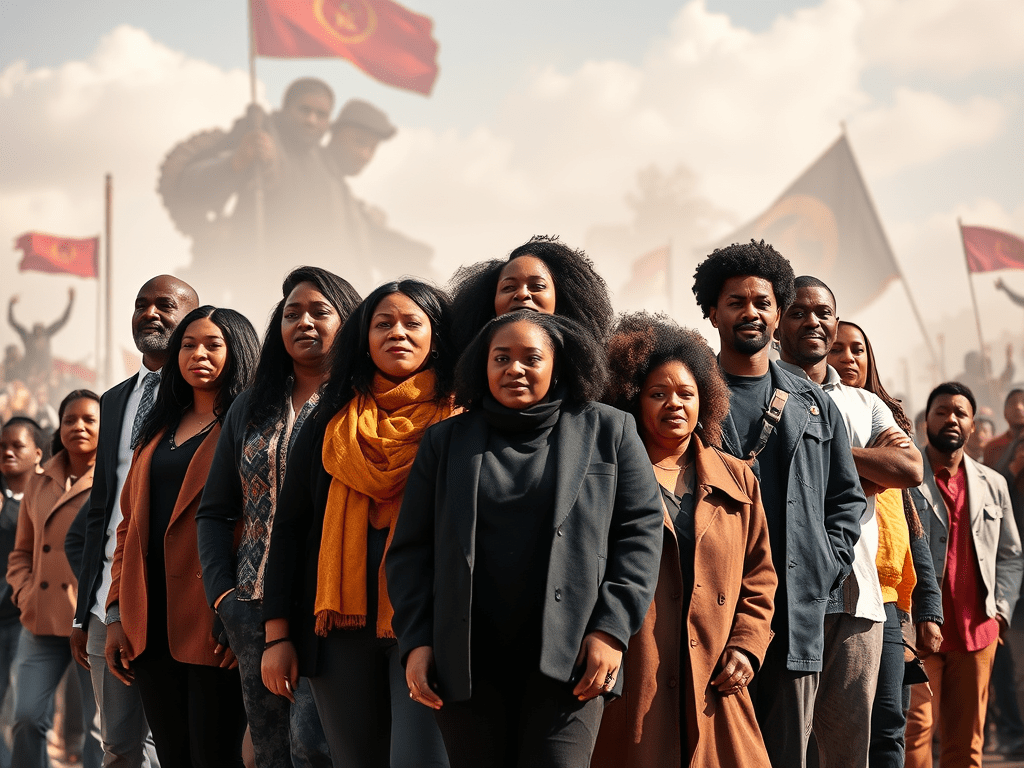
In the ongoing journey toward liberation and self-determination, the #FREE2 movement urges us to reexamine leadership. We need to consider the oppressive legacies of the past. We must also look at the internal dynamics within Black communities today. To truly be #FREE2, we must dismantle outdated, hierarchical leadership models rooted in the scars of slavery. We must also rebuild our institutions on principles of collective empowerment and shared responsibility.
The Legacy of Plantation Hierarchies
During slavery, Black people were forced into roles defined by proximity to white authority. Some enslaved individuals were given positions of oversight. This often pitted “house slaves” against “field slaves.” This situation created an internalized hierarchy that valued compliance and proximity to power over communal responsibility. This survival mechanism originated from extreme oppression. It has left deep marks on how leadership is perceived today. It also affects how leadership is practiced within Black institutions.
Understanding the HNIC Complex
The term HNIC (Head Ni**a In Charge) encapsulates a leadership model where an individual’s authority is more about internalized validation than genuine empowerment. Several factors contribute to this phenomenon:
- Internalized Oppression: The lingering trauma from centuries of slavery can lead some to unconsciously replicate oppressive structures. They also mimic the hierarchical frameworks imposed by white supremacy.
- Survival Mechanism: In environments where Black leadership faces constant threats, leaders overcompensate. This can lead to authoritarian styles that emphasize control over collaboration.
- Ego and Validation: Systemic exclusion limits opportunities in broader leadership spaces. Achieving a position of power, even in a restricted context, can become a source of personal validation.
In many Black institutions—whether in corporate settings, politics, entertainment, or religious organizations—the HNIC model remains prevalent. A singular leader often dominates decision-making, sometimes suppressing potential successors or dissenting voices. This inadvertently reinforces power structures that hinder true collective progress. It causes the institution to “swell” rather than experience genuine growth. As a result, success is misinterpreted, leading to stagnation and stunted collective advancement.
The Interplay with White Supremacy
Historically, the HNIC complex has functioned as an intermediary between systemic white power and Black subordinates. This dynamic not only pacifies dissent but also maintains the status quo. By acting as buffers, these leaders can divert attention from systemic issues. This happens whether they intend to or not. Yet, broader engagement is needed to address these systemic issues. The focus on individual leadership, rather than community-driven change, misplaces accountability and stifles collective empowerment.
The Impact on Community and Progress
The consequences of the HNIC model are significant:
- Stifled Collective Power: Overemphasis on a singular leader undermines grassroots mobilization and community solidarity.
- Toxic Organizational Culture: Gatekeeping and a top-down approach limit opportunities for emerging voices, often breeding environments where dissent is unwelcome.
- Misplaced Accountability: By centering power in one figure, attention shifts away from systemic challenges and the need for collective action.
Breaking the HNIC Complex: A Call for Decentralized Leadership
To honor the promise of the #FREE2 movement, we must break free. We must escape from the inter-generational chains of the HNIC complex. This requires:
- Decentralizing Leadership: Moving away from hierarchical, single-leader models towards shared governance. Decentralized leadership encourages multiple voices, fostering sustainable and dynamic community engagement.
- Healing Internalized Oppression: Recognizing and addressing historical trauma is key. By confronting internalized oppression, Black communities can begin to redefine leadership on their own terms.
- Emphasizing Community-Driven Change: True liberation lies in grassroots initiatives that prioritize collective well-being over individual power.
Reimagining Leadership for Black Liberation
Effective leadership for Black Americans with ancestral ties to slavery should address historical wounds. It must also build pathways for future empowerment. Here are several paradigms that offer a roadmap for leadership free from the constraints of the HNIC complex:
1. Communal Leadership (Ubuntu Leadership)
Principle: “I am because we are.”
Rooted in African traditions, this model values interconnectedness and collective decision-making. Leaders like Ella Baker exemplified this approach during the Civil Rights Movement. She advocated for group-centered action. Her focus was on collaboration rather than a reliance on singular figures.
Best Applications: Grassroots organizing, community advocacy, and cooperative economics.
2. Transformational Leadership
Principle: Inspiring change by uplifting others.
This paradigm emphasizes a long-term vision. It aims for collective liberation. This is evident in Malcolm X’s evolution toward a global human rights perspective.
Best Applications: Political movements, educational reform, and mentorship initiatives.
3. Servant Leadership
Principle: Leading by serving others first.
Fannie Lou Hamer tirelessly advocated for sharecroppers and the working class. Her work demonstrates leadership that prioritizes community well-being over personal gain.
Best Applications: Social justice organizations, nonprofits, and faith-based community work.
4. Decentralized Leadership (Collective Governance)
Principle: Distributing power to avoid over-reliance on a single leader.
The Black Panther Party’s model of multiple regional leaders working in tandem highlights the strength of a decentralized approach.
Best Applications: Black-owned cooperatives, mutual aid networks, and political organizing.
5. Reparative & Restorative Leadership
Principle: Healing generational wounds while rebuilding self-sufficient communities.
Leaders like Dr. Joy DeGruy focus on healing from Post-Traumatic Slave Syndrome (PTSS). Their work illustrates how acknowledging intergenerational trauma can pave the way for economic growth. It also supports cultural restoration.
Best Applications: Mental health advocacy, economic development initiatives, and cultural restoration projects.
6. Africana Womanist & Intersectional Leadership
Principle: Centering the voices of Black women and addressing multiple layers of oppression.
The work of the Combahee River Collective is significant. Leaders like Angela Davis remind us that inclusive leadership must address gender, class, and identity differences.
Best Applications: Gender equity initiatives, intersectional community building, and justice work.
7. Economic & Sovereignty-Based Leadership
Principle: True independence comes from control over economic resources.
This model draws inspiration from Black Wall Street. It also takes cues from Marcus Garvey’s UNIA movement. The model advocates for self-sufficiency through entrepreneurship and group economics.
Best Applications: Black business cooperatives, investment collectives, and financial literacy programs.
Moving Forward: Healing, Empowering, and Liberating
The path to true liberation is clear. We must free ourselves from the shackles of internalized oppression. We must also eliminate the outdated HNIC complex. By adopting leadership models that focus on communal well-being, Black communities can reclaim the narrative. They can emphasize collective action and economic sovereignty. This paves the way for a future where every voice matters.
The #FREE2 movement is not just a call to break free from physical and systemic chains. It is a call to liberate our minds. It is also a call to liberate our communities. Let us reject leadership models that echo the painful hierarchies of the past. Instead, let us build structures that empower all of us to thrive together.
Join me in this transformative journey. It’s time to be #FREE2 and lead with our hearts, our minds, and our collective strength.