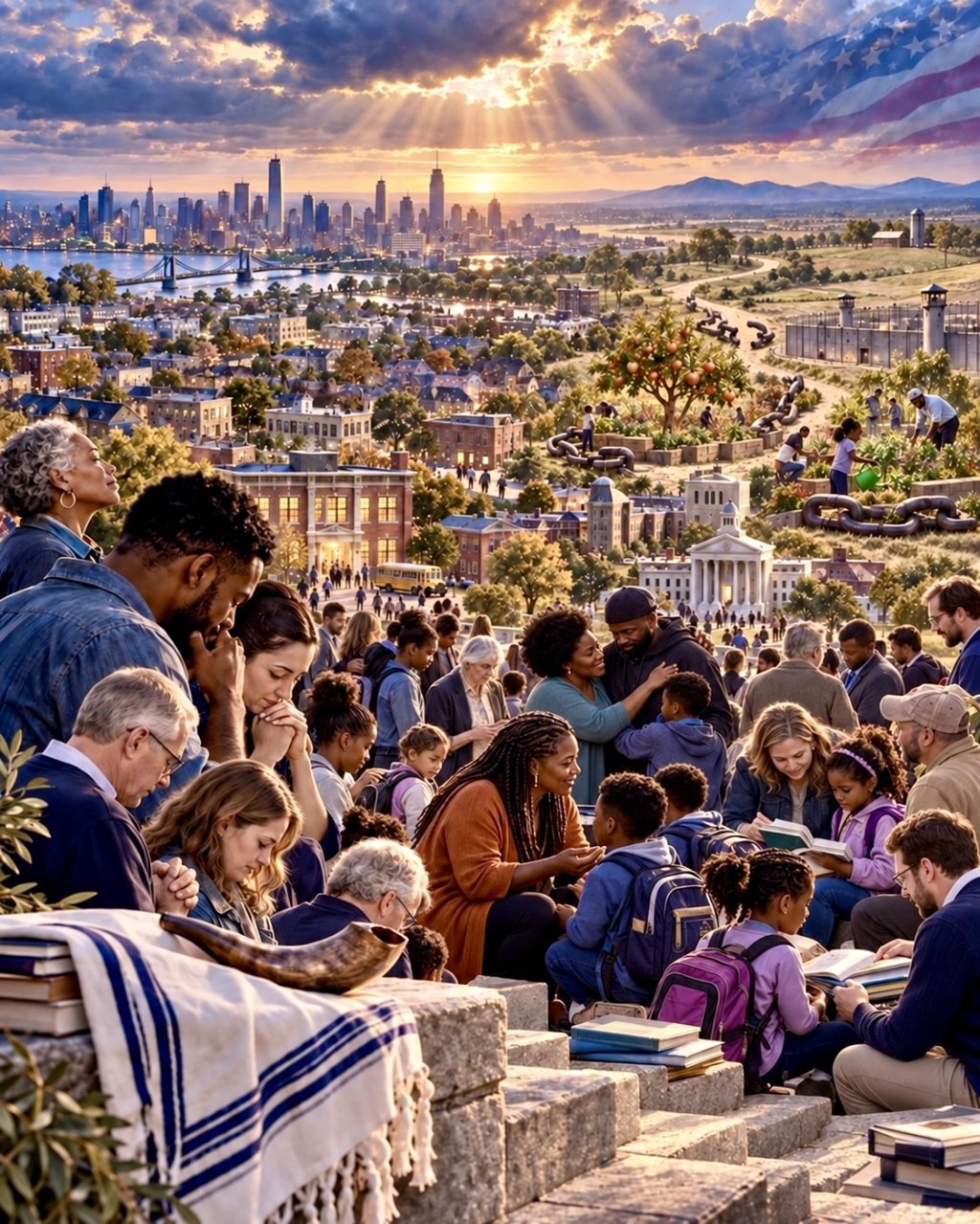
Yom Kippur, the Day of Atonement, calls believers to stop, examine ourselves, and turn toward YHWH. But the truth is, we cannot speak honestly about repentance while refusing to look at the harm we’ve done or the harm we’ve learned to accept.
As I observe this day, I can’t stop thinking about the current condition of the United States. I’m thinking about children who enter classrooms carrying the weight of poverty, family separation, and toxic stress they didn’t create. I’m thinking about how quickly a child’s struggle can become a discipline record, and how easily that record can become part of a path toward the criminal injustice system. I’m also thinking about the people in prison whose families are living with the consequences of their absence.
These are human lives, and we as a people, especially black Americans have every reason to question how poverty, education, policing, and incarceration intersect. But the question reaches every community where children grow up with too little support and too many barriers to freedom.
Today, Yom Kippur asks us to examine our own hearts to discover if we’ve misjudged a child, a parent, a family, or a community before asking what happened to them? Have we called a punishment just, without asking whether it helps anyone to heal, take responsibility, or return home better equipped to live?
It also asks us to look at what we do collectively. Repentance cannot end with a confession if we return to the same choices the next morning. In Isaiah 58, the prophet calls people to loosen unjust burdens, care for those in need, and rebuild what has been broken. That passage challenges me to ask, what do our prayers require of us after the fast is over.
John the Baptist called people to “bear fruits worthy of repentance” (Luke 3:8). When the people asked what they should do, he spoke about sharing with those in need and refusing to misuse power (Luke 3:10–14). His words press the question Isaiah raises: if we say we have turned toward YHWH, what fruit will our neighbors see?
For the U.S., this means asking hard questions about the conditions we pass from one generation to the next. Do our schools have the people to recognize and the resources to implement a child’s needs before it’s too late? Or, does it even care? Do our policies respond to hardship with help, or wait until hardship becomes a crisis? When someone is incarcerated, what happens to their children? When parents come home, is there a real path back to family and community?
At this point, I don’t have all the answers, but the FREE² Movement is part of my commitment to seek them out; by learning, bringing people together, and working toward a freedom that can be passed forward rather than lost within the next generation. Its starting point is education, because every child deserves support long before the justice system ever knows their name.
And as a believer in a Hebrew Lord and Savior, I come to Yom Kippur with gratitude for mercy and with a responsibility to respond to it. One thing I cannot do is ask YHWH to search my heart while closing my eyes to my neighbor. I cannot speak of freedom while ignoring the children growing up closest to the pipeline.
For American believers, may this day lead us to truthful repentance. May it move us to listen to families, question policies, repair harm, and care for children while there is still a little time to help change their course.